Why creators quit Reels, and how to fix the editing bottleneck
Most creators don't quit Reels for lack of ideas. They burn out on editing. Here is what the 2025 data says and what changes when editing becomes direction.
- Burnout is widespread: in 2025 surveys, 52% to 62% of creators reported experiencing it.
- The problem is rarely ideas. It is the hidden work between filming and posting: cuts, audio, captions and design choices.
- Consistency matters for growth, so a workflow you can sustain beats a perfect one you abandon.
- When editing becomes direction (you describe, AI executes), time, skill and taste stop blocking every post.
- A tool removes friction, not every cause of burnout: ideas, filming and finances are still yours to manage.
Most creators who stop posting Reels have not run out of ideas. They run out of energy for the part between filming and posting: cutting pauses, cleaning audio, timing captions, picking fonts and effects. When that work turns into direction (you say what you want, AI does the timeline work), the bottleneck shrinks and posting becomes something you can keep doing.
Burnout is common, and it is not about ideas
The 2025 numbers are hard to ignore. In a Billion Dollar Boy survey of 1,000 creators in the US and UK, 52% said they had experienced burnout from their career, and 37% had considered leaving. The most cited cause was creative fatigue (40%), followed by demanding workloads (31%).
A separate Creators 4 Mental Health study of 542 North American creators found that 62% experience burnout and 69% obsess over how their content performs.
At the same time, platforms reward showing up. Buffer analyzed 2.1 million Instagram posts and found that moving from 1 to 2 posts a week to 3 to 5 more than doubled the follower growth effect, while weeks with no posts came with a measurable dip. Buffer's own conclusion is the useful one: the best schedule is the one you can actually keep.
So creators are stuck in the middle. The algorithm wants consistency, and every Reel costs a session of editing.
The four bottlenecks behind every Reel
If you have ever left a good clip in your camera roll for a week, you know these.
| Bottleneck | What it feels like | What usually happens |
|---|---|---|
| Time | "I filmed it Monday. It's Friday and it's still raw." | The post gets skipped |
| Skills | Keyframes, audio levels, export settings | You post raw clips or give up |
| Taste | Hundreds of fonts and transitions, no idea which fit | An inconsistent feed and endless second-guessing |
| Tools | One app for cuts, another for captions, a third for audio | More time managing tools than creating |
Time
Editing a talking-head clip is repetitive. You find every pause, remove every "um", delete the take where you lost your thought. None of it is hard on its own, but it adds up fast. We break down how automatic cutting works in our guide to removing pauses and filler words.
Skills
Timeline editors are powerful, and they are built for editors. For a coach, a therapist or a small brand owner, learning keyframes (points that tell the software when a movement starts and ends) is a second job nobody asked for.
Taste
Even when you can do it, deciding how it should look is draining. Every Reel hides dozens of small decisions: font, size, caption position, color, transition, pace. That is where creative fatigue quietly builds up. We explore this in Taste is the new skill.
Tools
Analysts at MIDiA Research describe a paradox: tools are more accessible than ever, but the workflow has become a patchwork, and many creators spend more time managing creation than actually creating.
From timeline work to direction
Think about how you would work with a good human editor. You would not tell them which frame to cut on. You would say: "Make it tighter, drop the part where I repeat myself, and make the title punchier."
That is the shift. Instead of operating a timeline, you direct. AI handles the mechanical parts, and you keep the decisions that make the video yours: what to say, which take feels honest, what the hook should be.
Creators are already moving this way. In an Adobe Express survey of 384 US video creators, 71% had used AI video tools, and editing was the most common use (58%). Adobe sells AI tools and the answers are self-reported, so read it as a direction rather than a precise measurement. In the Billion Dollar Boy survey, 32% of creators named AI and scheduling tools as one of their ways to reduce workload.
How Reel Maker approaches it
Reel Maker is an AI editing studio for short vertical video (Instagram Reels, TikTok, YouTube Shorts), built around direction instead of timeline work. It runs inside Claude, the AI assistant made by Anthropic. You install it in Claude once, and then every Reel follows four steps:
- Choose a designer-curated look.
- Drop your raw footage.
- Direct: say what you want changed, in plain words.
- Export a 1080x1920 vertical video.
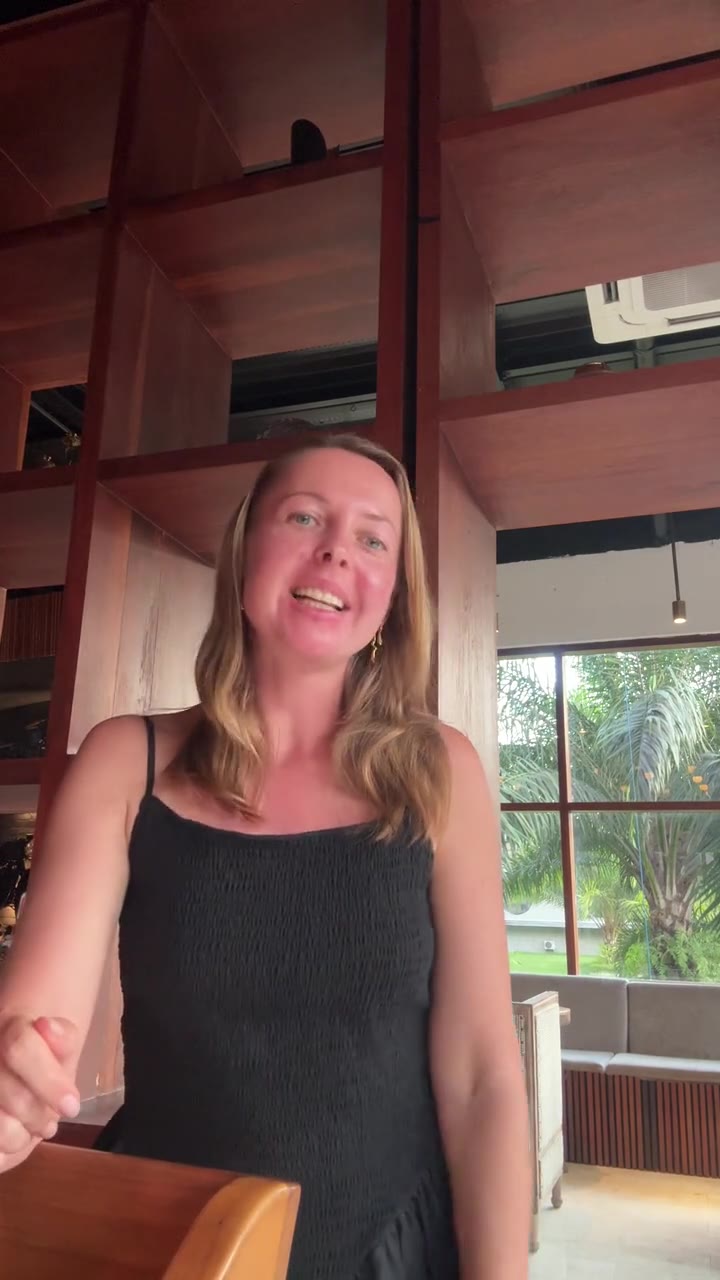
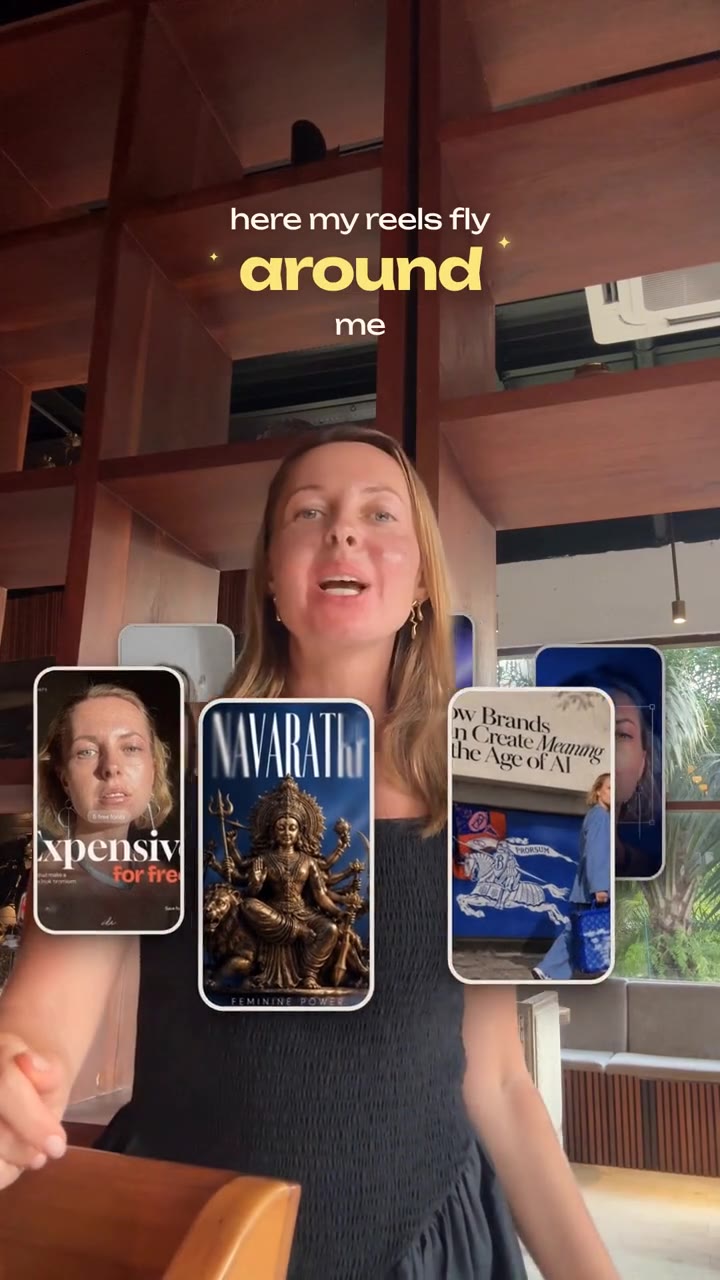
Here is how that maps to the four bottlenecks:
- Time: it cuts pauses, stumbles and retakes, and removes background noise (café chatter, for example) without distorting your voice.
- Skills: word-timed captions, a title or hook, motion effects like "Orbit" and "Covers wall", sound accents such as whooshes and pops on key moments, and a light, natural retouch. No keyframes.
- Taste: eight looks curated by a designer (Editorial, Minimal, Cinematic, Fashion, Bold Type, Soft Film, UGC, Product), where type pairs, captions, transitions and timing already work together.
- Tools: one place and one conversation, instead of three apps.
Example: "Cut the part where I repeat the intro, make the hook shorter, and add the Orbit effect when I talk about my reels."
What it does not fix
Honesty matters here. Reel Maker does not come up with your ideas, film for you, or guarantee reach. You still need something worth saying and a reasonably clean clip with decent light and sound. And it is worth watching every edit once before you post it, whoever or whatever made it.
Burnout also has causes beyond editing. In the Billion Dollar Boy survey, financial instability was ranked the most severe cause by 55% of creators who had burned out. A tool can remove friction. It cannot replace a sustainable plan for your work.
Reel Maker is currently in private beta with a waitlist, and there is no public launch date yet. For the full picture, read What is Reel Maker, and for the complete workflow from phone clip to posted Reel, see How to make Reels with AI.
If editing is the reason your best ideas never leave your camera roll, join the waitlist or come say hi in the Reel Maker community on Telegram, where the best prices and access news appear first.
Questions and answers
Why do so many creators stop posting Reels?
Surveys point to creative fatigue, heavy workloads and pressure around performance. For talking-head creators, editing is a big part of that workload: every short video needs cuts, clean audio, captions and design decisions.
How often should I post Reels to grow?
Buffer's 2025 analysis of 2.1 million Instagram posts found 3 to 5 posts a week to be a strong range, but its main advice was to choose a schedule you can keep. Consistency you can sustain beats bursts followed by silence.
What does 'editing as direction' mean?
Instead of working on a timeline frame by frame, you describe the result you want in plain words, like briefing a human editor. AI handles the mechanical work, and you keep the creative decisions.
Will AI editing fix creator burnout?
It can remove a large source of friction, the repetitive editing work, but it does not replace having ideas, filming, or a healthy relationship with metrics. Treat it as one part of a sustainable routine.
Sources
- Billion Dollar Boy: Over half of creators face burnout (2025)
- Tubefilter: Creators 4 Mental Health study results (2025)
- Buffer: How often should you post on Instagram? Data from 2 million posts (2025)
- Adobe Express: How creators use AI video tools across platforms (2026)
- MIDiA Research: Video creation has never been easier, so why does it feel harder? (2026)